

02 Feb What Makes a Great Magician
What Makes a Great Magician? The Skills That Separate Good from Great
Is it technical skill or showmanship that makes a magician great? Here's what really separates a good performer from a great one, from someone who's spent 28 years finding out the hard way.

Magic has always been a balancing act - the kind that teeters between leaving an audience in stunned silence or politely clapping while they wonder how soon they can leave. On one side there's technical skill: the hours of practice, the precision, the dedication. On the other there's showmanship: charisma, a cheeky smile, the knack of keeping a room hanging on your every word.
So what actually separates a good magician from a great one? It isn't just mastering sleight of hand or rattling off card tricks clean enough to fool a CCTV camera. It's the ability to perform with soul - to connect with people, whether they're five feet away at a close-up set or watching from the back of a function room. You can have surgical technique and still be forgettable if there's no spark behind it.
This is a straight answer to a question I get asked a lot, from someone who's spent 28 years finding out the hard way. We'll cover the skills a magician actually needs, why showmanship usually wins, the famous names who prove it, and why it's never too late to start. If you'd rather skip the theory and see what this looks like at a real event, here's how I work corporate rooms. Otherwise, read on.
What makes a great magician?
What makes a great magician?
A great magician blends technical skill with showmanship. Clean sleight of hand matters, but the thing people remember is the connection - the charm, timing and stage presence that turn a trick into a moment. Skill earns respect; showmanship earns the standing ovation.
What skills does a magician need?
A magician needs sleight of hand, misdirection and crowd-reading, plus the softer skills that carry a room: humour, timing, storytelling and audience management. Technical ability gets you in the door, but reading people is the skill that separates a good magician from a great one.
What's the difference between skill and showmanship in magic?
Skill is the mechanics - the hours of practice behind a flawless move. Showmanship is how you make people feel while you do it. You can have one without the other, but the magicians audiences truly remember are the ones who pair both.
Can anyone learn to be a great magician?
Yes. Sleight of hand can be learned at any age, and the qualities that make a magician great - personality, humour, life experience - often improve with time. Plenty of great magicians started late. There's no expiry date on learning the craft.

Showmanship vs skill
You can have surgical technique and still be forgettable.
What truly separates a good magician from a great one isn't mastering sleight of hand or rolling out card tricks clean enough to fool a CCTV camera. It's the ability to perform with soul - to connect with people, whether they're five feet away at a close-up set or watching from across a function room.
Take Lance Burton, or stage icons like David Copperfield. Their technical excellence is undeniable, but their real power is making every act feel personal, even in front of thousands. They don't just perform; they make the impossible feel real - something the audience doesn't just watch, but feels.
A magician's greatness lives in that sweet spot: jaw-dropping skill married to charm, wit and presence. When the lights dim and the cheers fade, it's the connection that people remember - not the tricks.
The role of showmanship in magic
Here's the thing about magic - it's never just about the finger work. Mastering a sleight is impressive, but if your audience spends more time craning to catch the move than losing themselves in the moment, you've become a sleight-obsessed show-off. Magic isn't about bragging rights. It's about leaving an impression.
At its heart, magic is performance art. The truly great ones can turn a simple coin vanish into a spectacle, because it isn't about what's in your hands - it's about how you make people feel. Persuasion, humour and storytelling are the invisible forces. Even a few tricks can captivate when they're paired with real crowd work.
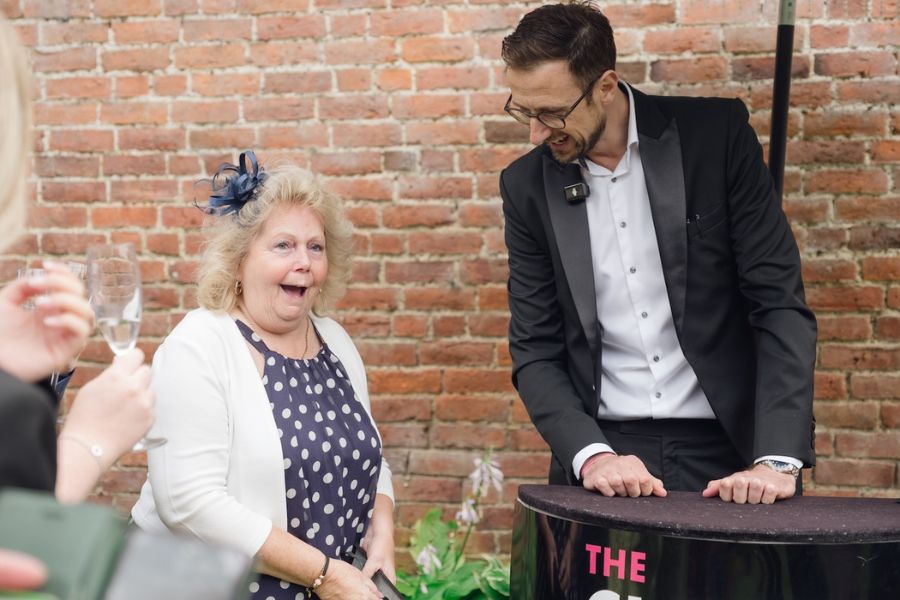
Most magicians who fail to wow a room aren't short on ability or practice. They're missing the human touch - the well-timed joke, the eye contact, the improvisation that builds trust. Nobody raves about flawless cuts and passes; they remember how you made their world feel bigger for a moment.
Entertain. Connect. Amaze. That's the holy trinity.
Examples of famous magicians
The most famous magicians didn't build their careers on a mountain of tricks - they built them on moments.
Not every magician is a master of intricate sleight-of-hand, and that's exactly what makes magic so diverse. Some of the most iconic names leaned on personality, storytelling and stage presence rather than technical wizardry. Because being a great magician isn't just about moves - it's about the memory you leave behind.
Consider The Amazing Johnathan. His claim to fame wasn't skill that left other magicians scrambling for their notepads. He turned the stage into a playground of irreverent humour and cheeky chaos, making even a few tricks feel like a wild, unpredictable ride. The showmanship pulled you in - he wasn't just performing magic, he was entertaining the room.
Then there's Harry Houdini, the ultimate daredevil and one of the most recognised stage magicians of all time. He didn't win audiences with card tricks; he blew their minds with stunts that dared to defy death - chains, water tanks, buried alive. Houdini proved that showmanship and sheer nerve could capture hearts everywhere.
We can't forget Penn Jillette, the voice of Penn & Teller. While Teller delivers skilled, silent close-up magic, Penn commands the stage with stories, humour and razor-sharp wit. Between them they redefined what it means to entertain with magic tricks - proof that connection often has little to do with manipulating cards and everything to do with personality.
And David Blaine? The modern master of mixing intense focus with jaw-dropping endurance and surreal performance art. Whether he's holding his breath for an impossible stretch or working a celebrity crowd with a cheeky smile, Blaine's pull is the clearest testament there is to blending skill with showmanship.
What ties these magicians together isn't the ability to perform - it's the ability to entertain. They understood that magic doesn't live in the moves; it thrives in the stories you tell and the connection you build. If you want to go deeper, here are the famous magicians that shaped my own world.
It's not the tricks.
Being a professional magician was never about robotic, flawless sleight of hand.
The truth? Magic is about connection, creativity and showing a room your own spark. The most successful magicians didn't rise to fame by memorising every move in the book - they understood the power of their own quirks: how to command a room, read reactions, and bring something distinctly them to every performance.
Authenticity is the real wand. Being unapologetically yourself wins hearts, and soft skills like audience management or a cheeky smile are often what turn a simple act into something unforgettable. Anyone can learn magic - but only you can bring your personality to it. That's also why there are so many different kinds of magicians: each one leans on a different mix of these.
So what actually makes a great magician? It comes down to a handful of qualities:
- Connection - the ability to make people they've known for nine seconds feel like the only person in the room.
- Showmanship - timing, humour and presence that turn a simple trick into a moment.
- Storytelling - giving an audience something to remember long after the trick is forgotten.
- Authenticity - a distinct personality that no amount of technical practice can fake.
- Solid skill - enough clean technique that the method never gets in the way of the magic.
Magic happens in the gasp, the wide eyes, the disbelief. Even a single trick delivered with passion can make all the difference - and the most masterful moments usually arrive when you're simply having fun with it.
What makes a great magician isn't the cleanest sleight of hand in the room - it's the spark behind it. Skill gets you taken seriously; showmanship is what people remember on the drive home. Master the moves, then forget about them, and connect with the people in front of you. That's the whole secret.
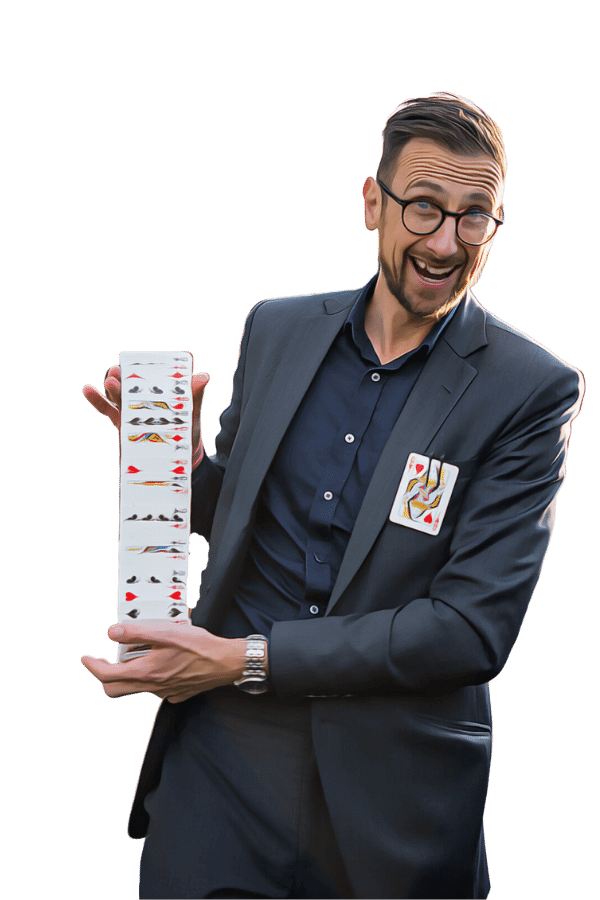
Skill and showmanship, in one suit.
28 years, 200+ five-star reviews, and a room I've never failed to win over. If you want a magician who's mastered the moves and remembers it's really about the people, drop an enquiry for availability and a pricing PDF - I reply within hours.