

15 Jan Kinds of magicians
10 Types of Magicians
From close-up and mind reading to escapology and pickpocketing - the ten main types of magicians, what each one actually does, and which fits your event.

Magician is a single word covering wildly different jobs. The close-up performer working a deck of cards inches from your face and the illusionist making a motorbike vanish on a theatre stage are both "magicians" - but almost nothing about what they do is the same. So when people ask about the different types of magicians, they're usually trying to work out which one they actually mean.
This guide breaks down the ten main kinds of magicians, what each one does, and the sort of event each suits best. Some are people you'd book; others, like escape artists and dove acts, are types you'll mostly recognise from television. Either way, by the end you'll know your mentalist from your cabaret act and your street magician from your stage illusionist.
I'm Close-Up Chris, a working close-up and comedy magician with 28 years in, 200+ five-star reviews, and ranked #1 in the UK on FreeIndex. If you already know the type you want and just need someone to do it, you can skip ahead to magicians for hire. Otherwise, let's sort the deck.
What do you call someone who does magic tricks?
A performer of tricks involving sleight of hand is called a magician, or sometimes a conjuror. A magician who specialises in close, hands-on tricks with cards, coins and everyday objects is a close-up magician; one who performs large-scale illusions for a crowd is an illusionist. They are all magicians, but the style and setting are what set them apart.
What is a group of magicians called?
There's no official collective noun for a group of magicians, though playful suggestions like "an illusion of magicians" do the rounds. The standard words for several magicians performing together are simply a troupe, a magic act, or a company. A formal members' organisation, such as The Magic Circle, is called a society.
What's the difference between a magician and an illusionist?
The difference is scale. "Magician" is the umbrella term for anyone who performs magic. "Illusionist" usually means a stage magician who works with large-scale illusions, big props and theatrical effects, like making a person or object vanish in front of a whole audience. Every illusionist is a magician, but not every magician is an illusionist.


The Close-Up Magician
The magic happens inches from your face - cards, coins and borrowed objects, no stage required.
This is my world, so I'm biased, but close-up is the type most people picture when they imagine a magician working a room. A close-up magician performs hands-on tricks for small groups - over a cocktail table, between courses at dinner, or mingling through a drinks reception. Because it's happening right under your nose, every gasp and double-take lands harder than anything on a distant stage.
You'll also hear close-up magicians called roaming magicians, strolling magicians, sleight-of-hand magicians, or mix-and-mingle entertainers - all roughly the same job. It suits corporate events, weddings and parties where you want entertainment that gets people talking to each other.
If that's the style you're after, you can see availability over on my magicians for hire page.
The Mind Reader (Mentalist)
Works with the mind, not the hands - and it gets under people's skin.
A mentalist is a magician who reveals a word you secretly thought of, names a memory you never spoke aloud, or predicts a choice before you've made it. Derren Brown is the obvious UK reference point, and he's turned mental magic into something closer to theatre than a card trick.
The skill on show is psychology, suggestion and showmanship dressed up as something supernatural. A good mind reader connects with people on an oddly personal level, which is why it lands so well at corporate dinners and intimate evenings - it feels less like watching a trick and more like being read.
Plenty of close-up and stage magicians fold a bit of mentalism into their act rather than doing it exclusively, so you'll often meet a mind reader without one being booked as one.

"Half of mentalism is reading the room before anyone's said a word. The other half is letting people convince themselves you did the impossible."
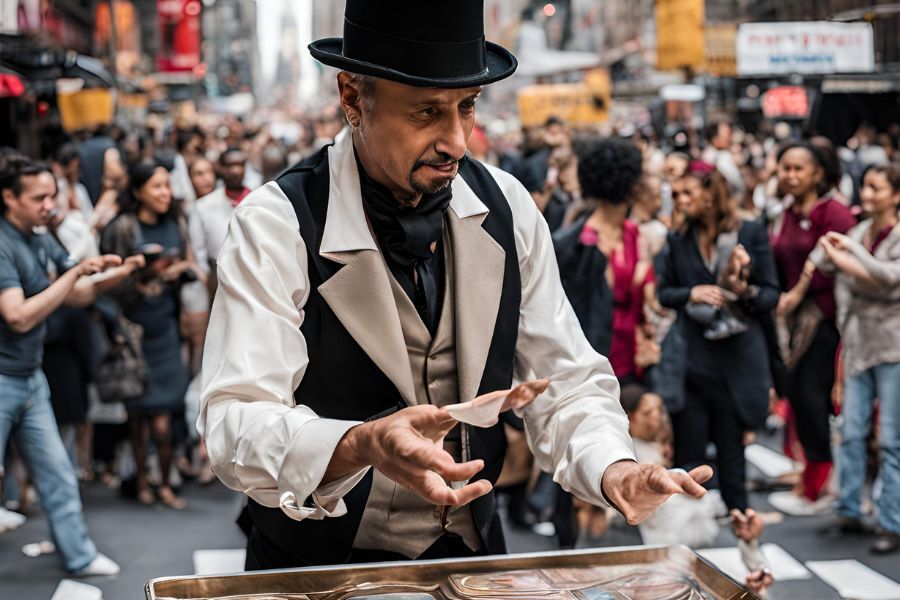
The Street Magician
Raw, in-your-face, and built on whatever's in your pockets.
No curtains, no stage, no glamorous assistant - just a deck of cards, some borrowed coins and a stranger who's about to have a very confusing minute. It's the style David Blaine and Criss Angel dragged onto television in the late 90s, and it changed how a whole generation pictured magic.
Blaine built a career turning simple sleight of hand into spectacle - and then into outright endurance stunts, from standing encased in ice to going days without food. Criss Angel pushed it somewhere edgier and more rock-and-roll. The appeal is spontaneity: it looks like it could happen to anyone, anywhere, with no setup.
In the UK, Paul Zenon is the name long associated with this stripped-back, streetwise style of performing.
The Children's Magician
Unfairly written off as the training-wheels end of magic, the children's magician is doing one of the hardest jobs in the trade. A room of sugar-fuelled kids is the most honest, most brutal audience you'll ever face - they'll tell you to your face if you're boring, and they cannot be charmed into politeness.
It's a job built on adaptability. Holding a group of four-to-six-year-olds with slapstick and bright visuals is a completely different skill from keeping nine-year-olds intrigued, or winning over the ten-year-old who's decided they've seen it all and secretly wants to be proved wrong. The best children's magicians make that tightrope walk look effortless, mixing comedy, clever tricks and genuine engagement while dodging sticky hands and endless requests for balloon animals.
For the record, this isn't what I do - I work adult events: corporate, weddings and parties. If you've got a kids' party, you want a dedicated children's entertainer, not me.
What it actually looks like
Reading about the types is one thing. Watching one land on a real crowd is another. Here's a quick clip - no cuts, no staging, just guests reacting to close-up magic happening inches in front of them.
There's hundreds more clips on my Instagram, TikTok and YouTube.
The Cabaret Magician
Cabaret magic is the bridge between close-up and the big stage. It's a show built for a room of roughly twenty to a hundred people - too many for everyone to crowd round a single table, too few to need a theatre and a lighting rig. Often overlapping with parlour magic, it leans on charisma, comedy and timing as much as on the tricks themselves.
A cabaret magician will pull volunteers up, work the whole room, and run a set with a beginning, middle and a proper finish - more of a performance than the rolling mingle of close-up. It suits after-dinner slots, milestone parties and any event where guests are seated and ready to watch something together.
For a lot of celebrations this sits naturally alongside the kind of entertainment a party magician brings - performed-to-the-room magic rather than one-on-one.
"Everything comes back. The fun is watching someone realise their watch was gone - and that they were laughing the whole time it happened."
The Pickpocket Magician
Not a thief in a nice suit - a performer who turns "stealing" into entertainment.
A pickpocket magician lifts watches, wallets, ties and the odd pair of braces with enough sleight of hand and comic timing that the victim ends up laughing along with everyone else. And it all comes back; no police required.
What makes it land is the psychology. While a standard close-up magician dazzles you with cards and coins, the pickpocket adds a layer of misdirection that keeps a whole room glancing nervously at their own pockets. It works one-to-one at a reception and scales up to a stage set with volunteers, which is why it crosses so naturally into comedy magic.
It's one of my favourite things to do at an event. If it's the type you're after, take a look at pickpocket magician hire.
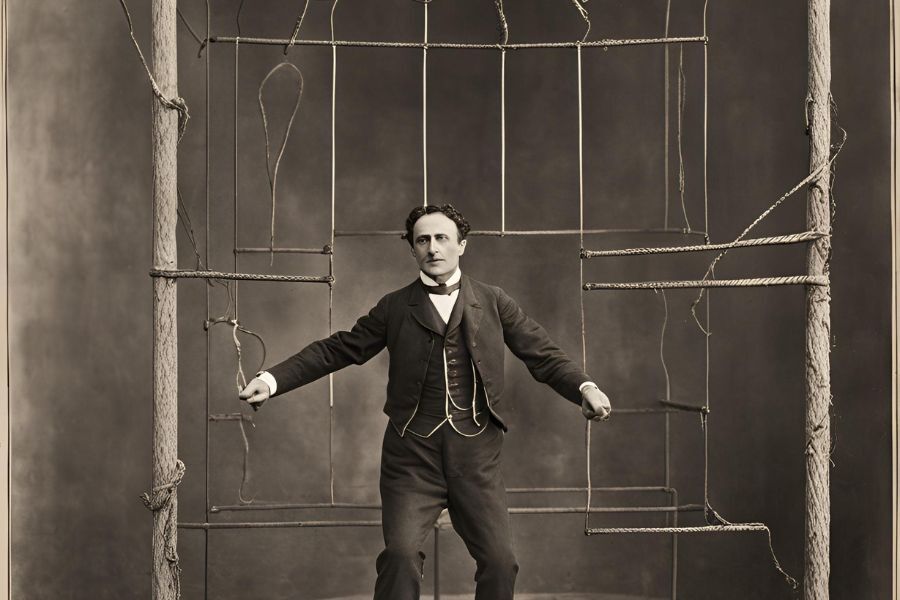
The Escape Artist
For sheer nerve, the escape artist takes the crown. This is the magician who wriggles out of a straitjacket while dangling above a stage, or gets free of a locked water tank before the audience remembers how to breathe. It's usually classed as a branch of stage magic, but the currency isn't wonder so much as dread - the slow, ticking tension of watching someone gamble with real danger.
The trick, if you can call it that, is that there's no supernatural shortcut. Escapology is built on relentless practice, breath control, hidden technique and an unusually relaxed attitude to risk. The showmanship is in stretching every second so the room is genuinely unsure whether this one comes off.
The name everyone knows is Harry Houdini, who more or less invented the genre as popular entertainment and set a bar performers still measure themselves against a century later.
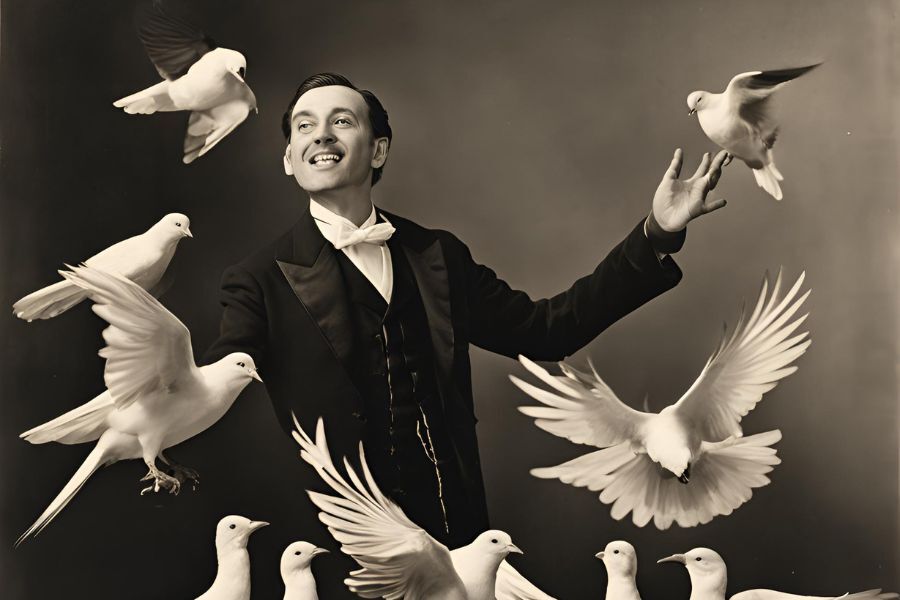
The Dove Magician
Straight out of magic's golden age, the dove act is all elegance and flourish - white birds appearing from an empty scarf, vanishing in a flash, then multiplying until you lose count. It's a classic strand of stage magic, built on grace and precision rather than shock, and at its best it's genuinely beautiful to watch.
It isn't an amateur's game. Dove magic demands serious timing, careful handling and a real partnership with the birds, which is why far fewer performers do it now - and why modern conversations about animal welfare have changed how, and whether, it's performed at all.
The performer most associated with raising it to an art form is Lance Burton, whose dove work set the standard others spent careers chasing.
The Comedy Magician
For a lot of magicians - me included - the comedy isn't a garnish on the magic. It's half the act.
A comedy magician builds the whole performance around getting laughs as well as gasps, so the tricks are the engine but the patter, timing and the willingness to look daft are what people actually remember.
It overlaps with nearly everything else on this list. Close-up, cabaret and pickpocket acts all lean on comedy to keep a room warm, and a good comedy magician reads the crowd like a stand-up - knowing when to land a gag and when to let a piece of magic breathe. Nobody should feel like they're being shown a puzzle; they should feel like they're at the best part of the night.
It's the bulk of what I do at weddings, corporate events and parties. If that sounds like your kind of thing, here's my comedy magician page.

"If they're laughing, they've already forgotten to look for the move. Comedy isn't the wrapping - it's the misdirection."
What else is a magician called?
"Magician" is the everyday word, but the trade has collected a fair few others over the years - some describing a style, some just older or more theatrical names for the same job. If you're hunting for another word for a magician, these are the ones worth knowing:
The right name usually comes down to the style. A close-up performer is happy being called a magician or a conjuror; a stage performer might prefer illusionist; someone working purely with the mind is a mentalist. They all sit under the same umbrella.
Looking for a synonym for "magician"?
If you're after another word for a magician - for a crossword, a bit of writing, or just curiosity - the right synonym usually depends on the kind of magic involved. Here are the most common ones, from the everyday to the deliberately old-fashioned:
For most purposes, conjuror and illusionist are the closest everyday synonyms for a working magician. Prestidigitator is the fancy, show-off word - it literally means "quick-fingered" and refers to sleight of hand. Sorcerer, enchanter, magus and wizard lean towards fantasy and folklore rather than stage performers, so they're better for fiction than for describing someone you'd actually book.
Crossword clue? The usual answers are conjuror (8), illusionist (11), or - if it's a short one - mage (4) or magus (5).
The different types of magic
It's worth separating two things people often mix up. The list above covers types of magician - the performers. But there are also different types of magic, meaning the skills and disciplines a magician draws on. Most performers combine several of these rather than sticking to one:
- Card magic - tricks built around a deck of cards, the backbone of close-up.
- Coin magic - vanishes, productions and sleights with coins and small objects.
- Mentalism - mind reading, predictions and psychological magic.
- Stage illusion - large-scale illusions and grand theatrical set pieces.
- Parlour magic - mid-sized magic for a seated room, between close-up and stage.
- Escapology - escapes from restraints, locks and containers.
- Pickpocketing - lifting watches and wallets as performance, not theft.
So a single magician might perform several types of magic in one night - a few card and coin routines up close, a touch of mentalism, then a stage piece to finish. The type of magician describes who they are; the types of magic describe what they can actually do.
Ten types, one word. Once you know whether you want close-up, cabaret, comedy or grand stage illusion, choosing the right magician for your event stops feeling like guesswork - and starts feeling like the easy bit.
Now go find yourself the right magician.
If that magician happens to be me - close-up and comedy, 28 years in, 200+ five-star reviews - the next step is simple. Check availability for your date and I'll send a pricing PDF back within hours.