

05 Mar Order of speeches at wedding UK
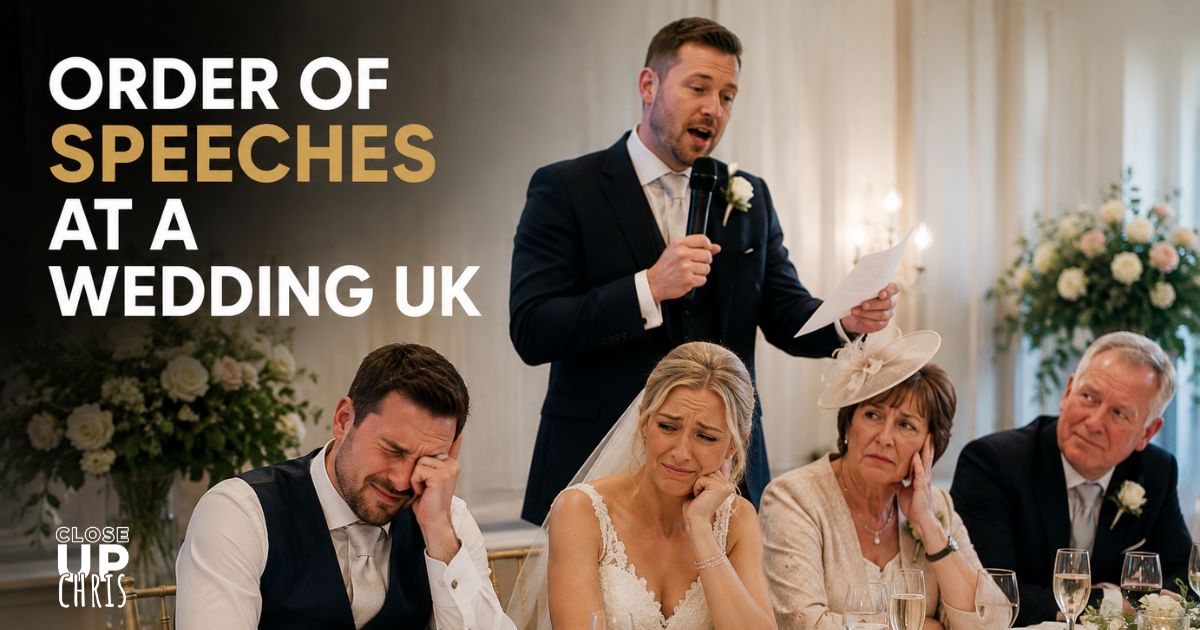
Order of Speeches at a Wedding
The traditional UK running order - who speaks, in what order, and when - plus honest tips for the father of the bride, groom and best man.

The order of speeches is one of those wedding details that sounds simple until you're actually planning it. Who goes first? When do they happen - before or after the meal? And does anyone still stick to the "traditional" order at all? This is the plain-English guide to the order of speeches at a UK wedding.
Traditionally, the running order is father of the bride, then the groom, then the best man, with any other speakers slotted in afterwards. That's the classic wedding speech order - but it's a guide, not a rulebook. Plenty of couples mix it up to suit their day, and there's no reason you can't.
Below you'll find the full traditional order, who says what, who toasts who, and honest tips for each speaker - plus the eternal debate of whether the speeches should come before or after the wedding breakfast.
The traditional running order
Father of the bride, then the groom, then the best man - with anyone else after.
That's the classic UK wedding speech order, and it's endured for a reason: it builds from heartfelt to funny, and gives each speaker a clear moment. But it's a tradition, not a rule.
If the bride wants to speak, if both sets of parents fancy a turn, or if you'd simply rather flip the order around - go for it. The only real rule is to tell every speaker the running order well in advance, so nobody's caught off guard when their name gets called.
Father of the bride
There's no better moment than the father of the bride speech. He's up first, so he kicks everything off with the opening toast - and expectations are high. It's usually an emotional one, full of pride for his daughter, so have the tissues ready.
- Keep it brief - a long, rambling speech isn't fun for anyone.
- Share a few stories - the couple will love hearing them.
- Thank everyone - guests, family, and the suppliers who made the day happen.
The groom's speech
All eyes on him - so speak from the heart.
The groom speaks second, after the father of the bride and before the best man. Nerves are completely normal with the whole room watching - but a groom who gets it right is in everyone's good books for the rest of the night.
- Keep it light and heartfelt - tell your partner why you love them.
- Memorise the closing toast - don't read the important bit off a card.
- Use a microphone so the whole room actually hears it.
Nervous speakers sometimes do all the speeches before the wedding breakfast, so they can relax and enjoy the meal afterwards. For the full run-down, here's how to write a wedding speech.

"Memorise the final toast word-for-word. Fumbling that bit off a card is the moment people remember - for the wrong reasons."
The best man's speech
Third and traditionally last comes the best man. A chance to steal the show? Absolutely. A chance to ruin the day? You'd better believe it. I've watched best man speeches stink the place out with inappropriate tales, rambling, and zero structure.
Because it's usually the final speech, it carries real responsibility - land it well and the rest of the reception rolls on in good spirits.
- KISS - keep it simple. A few words, compliment the bride, land a toast, sit down.
- Plan ahead - bullet-point it and rehearse until it flows.
- Know your audience - not everyone wants tales of debauchery.
Who else can speak
The traditional three aren't the only voices at the top table.
The classic order covers three speakers, but plenty of weddings add more - and there's no rule against it. These are the most common extra speakers, slotted in wherever suits the flow of the day.
The Maid of Honour
A lovely counterpart to the best man, and increasingly common. Bridesmaids' and groomsmen's speeches are on the rise too - the order between them is entirely up to you.
The Bride
Why not? Whether or not the groom speaks, the bride can absolutely take the mic to thank everyone and share a few memories of her own.
The Groom's Parents
The father or mother of the groom may well want to say a few words. Don't let a rigid running order squeeze them out of the moment.
For same-sex couples, it's common for both sets of parents to speak. Whoever takes the mic, just make sure the running order is shared with every speaker in advance, so nobody's blindsided when their name gets called.

"The best man traditionally replies 'on behalf of the bridesmaids' - a neat bit of etiquette a lot of people forget."
Who toasts who
Beyond the running order, there's a traditional pattern to who toasts and thanks who - worth knowing, even if you bend it.
- The father of the brideToasts the health and happiness of the bride and groom, and welcomes the groom to the family.
- The groomThanks both families and the guests, then raises a toast to the bridesmaids.
- The best manReplies on behalf of the bridesmaids, reads any messages, and often ends with a final toast to the happy couple.
Speeches sorted?
Now the rest of the day.
The speeches are one moment of many. If you want the drinks reception and the gaps between courses to fly by, a wedding magician keeps every guest entertained. See what's included, then drop me an enquiry.
See Wedding Magic →Takes a minute. I'll reply back the same day.
Before or after the meal?
The eternal debate - and there's no wrong answer.
Guests, having survived on a few mini sausages since the drinks reception, overwhelmingly want the speeches after the wedding breakfast. But spare a thought for the speakers: a nervous groom or best man can't taste a three-course meal with a speech hanging over them.
After the Meal
The traditional pick. Everyone's fed and relaxed before the speeches begin, so the atmosphere is warm and forgiving.
Before the Meal
Gets the nerves out of the way early, so your speakers can actually relax and enjoy their food afterwards.
The real fix for either camp is preparation. A well-rehearsed speech conquers most of the nerves, which frees your speakers to eat first and still deliver something memorable. Every wedding is different, so do what works for you - just communicate the plan clearly, and if guests are waiting longer for food, make sure they know in advance.
There's your traditional order of speeches - father of the bride, then the groom, then the best man, with anyone else slotted in wherever suits. Treat it as a starting point, not a straitjacket. Share the running order, point the toasts the right way, and give each speaker a little preparation - and the speeches become the highlight of the day, not the dreaded bit.
One less thing to plan.
Speeches sorted. If you'd like the gaps in the day handled by someone who's worked hundreds of weddings, I'd love to be there. Drop me an enquiry with your date and I'll get back to you within hours.