


06 Sep How to Write a Wedding Speech!
How to Write a Wedding Speech
Nine insider tips from a wedding magician who has watched hundreds of speeches land - and a few bomb - from the best seat in the room. Practical, UK-focused, written from the floor.

From my spot at the sweetheart table, I've watched hundreds of wedding speeches land - and a handful go down in flames. The best man who opens with a banger and has the room eating out of his hand. The father of the bride who mumbles into his notes and loses everyone by line three. I've seen exactly what works and what dies on its feet.
Here's the good news: a great wedding speech isn't about being a natural performer. It's about a few simple things done well - knowing your audience, opening strong, keeping it tight, and not reaching for the bottle to settle the nerves. Get those right and you'll have the room laughing, cheering, and maybe shedding a tear or two.
So here are nine insider tips, written from the floor by someone who's seen more wedding speeches than he's had hot dinners. Whether you're the groom, the best man, or the father of the bride, this is everything you need to write a speech that actually lands.
Know Your Audience and Open With a Bang
The first ten seconds decide everything.
Before you write a single line, work out who you're talking to. Are they close friends and family who know you inside out, or a room of distant relatives and acquaintances? That tells you which jokes will land and which will die in the silence. If you're not sure, err on the side of caution and keep the humour clean.
Then open with a bang. Your speech needs to be memorable, so don't start with a yawn-inducing "thank you all for being here." Try something clever or funny to grab the room from the very first line.
Getting an early laugh settles your nerves and gets the guests on your side. I've watched it happen hundreds of times - land the opener and the rest of the speech rides the wave.
Structure That Holds Attention
One or two good stories. A clear beginning, middle, and end.
Anecdotes are what personalise a speech - they give guests a glimpse into your relationship with the bride or groom. But use them judiciously. You don't want the whole thing turning into a feature-length box set. Pick one or two amusing stories and leave it there.
Beyond that, treat your speech like any good story: it flows from start to finish. That doesn't mean you can't deviate - a well-placed joke or personal anecdote adds levity and makes the speech more memorable. But broadly, stick to a beginning, a middle, and an end. It keeps you focused and keeps the room with you.
I've watched speeches with no shape wander off a cliff while everyone politely studies their napkins. The three-act spine is the simplest fix there is.

"Stories beat statistics every single time. Nobody remembers a list - they remember the time you both got thrown out of the pub."
Be yourself. Then stop.
The two fastest ways to lose a room: pretending to be someone else, and going on too long.
Forget trying to be a stand-up comedian if you're not one. Speak from the heart and let your own voice come through. It reads as authentic, it's more memorable, and the room can tell the difference between the real you and a performance. People want to hear from you, not a polished stranger.
And keep it short. No one ever complained that a wedding speech was too brief. Edit it down to the essential parts - there's no bigger mood killer than a long, laborious monologue stuffed with in-jokes only four people understand. Ruthless editing is your best friend.
A quick checklist before you call it finished:
- Sounds like you - read it aloud; if it doesn't sound like how you talk, rewrite it.
- Under five minutes - that's plenty for any single speaker.
- No inside jokes - if only the top table gets it, cut it.
- One clear ending - know your last line before you stand up.
I've watched five-minute speeches get standing ovations and fifteen-minute ones empty the bar. Brevity wins every time.
Master Your Delivery
A great speech on paper still dies if it's rushed, mumbled, or croaked out through a dry mouth.
Very few people are well-versed in public well-wishes, so most speakers gallop through at a rate of knots. Slow down. This moment deserves to be savoured, and speaking slowly lets you connect with the room - with the bonus that everyone can actually understand what you're saying. Practise out loud, in the car or in front of the mirror, and the pace comes naturally.
And keep water within reach. Your mouth will feel drier than the Gobi desert, and you'll be grateful for a few sips between sentences. Trust me, your bridal party will thank you for it.
I've stood feet away from hundreds of speakers. The ones who land it almost always do these four things without thinking.
Props and Toasts: The Memorable Moments
A physical prop sticks in the memory. A sharp toast closes the deal.
Props engage your audience and add visual interest - and as a bonus, they double as memory aids. A best man could use the bride's bouquet to tell the story of how the couple met. Anything physical gives the room something to look at and gives you a cue for what comes next. Used well, a prop adds real meaning and depth.
Then there's the toast. A well-worded one rounds off the speech, prompts the clinking of glasses, and cues the cheers. Something simple does the job: "Let's drink to love, which is nothing - unless it's divided by two" will raise a smile and lift the mood.
Or finish on a sentimental note by toasting "absent friends" - those who wished they could be there but, for one reason or another, couldn't make the day. I've watched a good toast turn a decent speech into one people still talk about at the next family wedding.


A great speech
starts early.
The best speeches aren't written the night before - they're drafted, slept on, and trimmed over weeks. If you're mapping out the run-up to the day, slot speech-writing in early so it's done well before the panic sets in.
See the Wedding Planning Timeline →Know exactly what to sort, and when.
Make Sure You're Heard
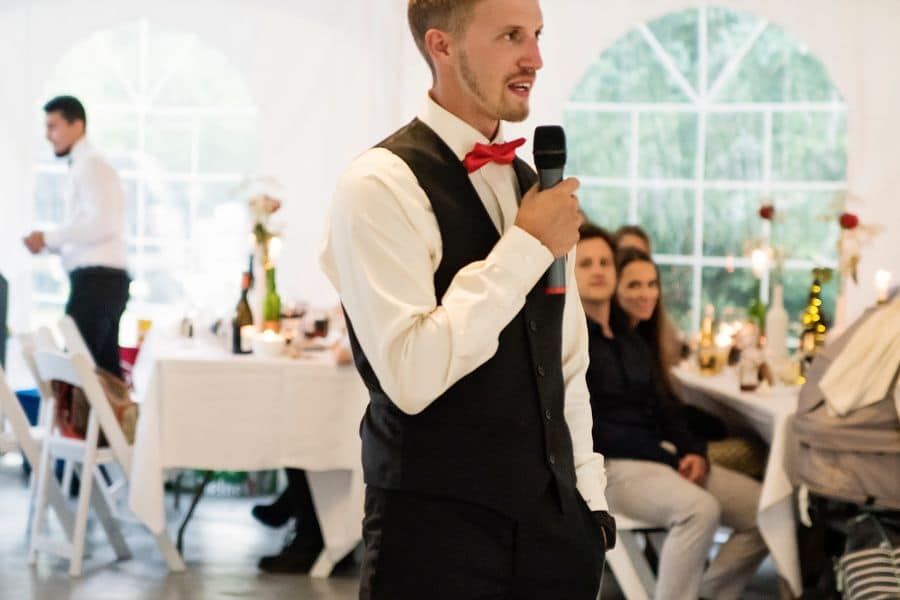
There's nothing worse than sitting at a wedding where you can't hear the speeches. Missing the groom thanking his new wife, or the best man's most embarrassing story about him, really puts a damper on the day. So make sure your speech reaches every corner of the room, loud and clear.
If there's a PA system, use it - a quick sound check beforehand is one of the best wedding speech tips going. No mic? Then it's time to project. You want everyone to hear you without shouting, so aim your voice towards the guests furthest away and keep your head up so the sound carries.
You wouldn't want your funny anecdote about the stag do to fall flat in the back row, would you? I've watched brilliant lines die simply because half the room never heard them.
The best line in the world is worthless if the back table can't hear it.
Cue Cards and Eye Contact
Prepare your material without burying your face in it. The two have to work together.
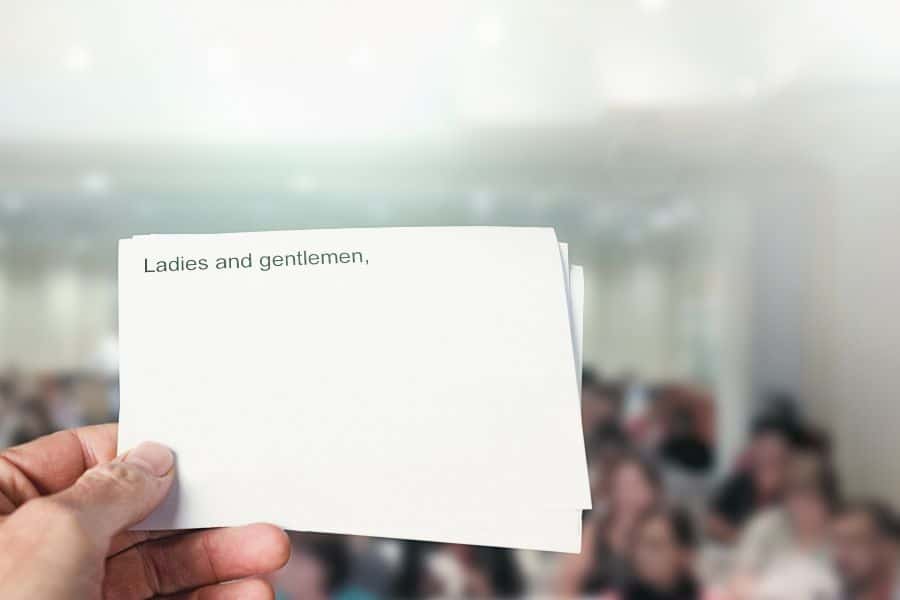
You've got three ways to prepare: memorise the whole thing, read from a full script, or use cue cards. Memorising can make the delivery flawless, but freeze on one line and the whole thing wobbles. Reading from a script stops that, but it's hard to connect with the room when your eyes never leave the page. Cue cards are the middle ground - a glance down for your key points, eyes up for everything else.
Because eye contact is what sells a speech. It builds rapport, conveys confidence, makes you look trustworthy, lets you gauge the room and adjust, and keeps listeners with you. Whatever prep method you choose, the goal is the same: stay connected to the faces in front of you.
And remember - stories are remembered, statistics aren't. Whichever method you pick, build it around a couple of memorable moments about the happy couple.
Glance, don't read
Key points only, a few words each. Enough to jog your memory, not so much that you bury your head in the page.

Eyes up, room with you
Builds rapport, reads as confident, and lets you feel the room. The single biggest difference between a flat speech and a warm one.
Tackle the Nerves
Real techniques beat a quick shot of courage. Every time.
Feeling nervous before a wedding speech is completely natural - it's not every day you stand up in front of a room full of people. But a few things genuinely help. First, remember everyone in that room wants you to succeed; they're your friends and family, on your side from the start.
Second, reframe it. Instead of "butterflies," tell yourself it's excitement, and let that feeling fuel the speech. And my top tip, the one I've watched work hundreds of times: practise, practise, practise. The more confident you are with your material, the less the nerves bite on the day.
What about Dutch courage? A quick shot might seem like the answer, especially if you're the father of the bride, but don't overdo it - you'll be in no fit state to deliver. Try deep breathing or visualisation instead. And if all else fails, picture everyone in their underwear. That usually does it.
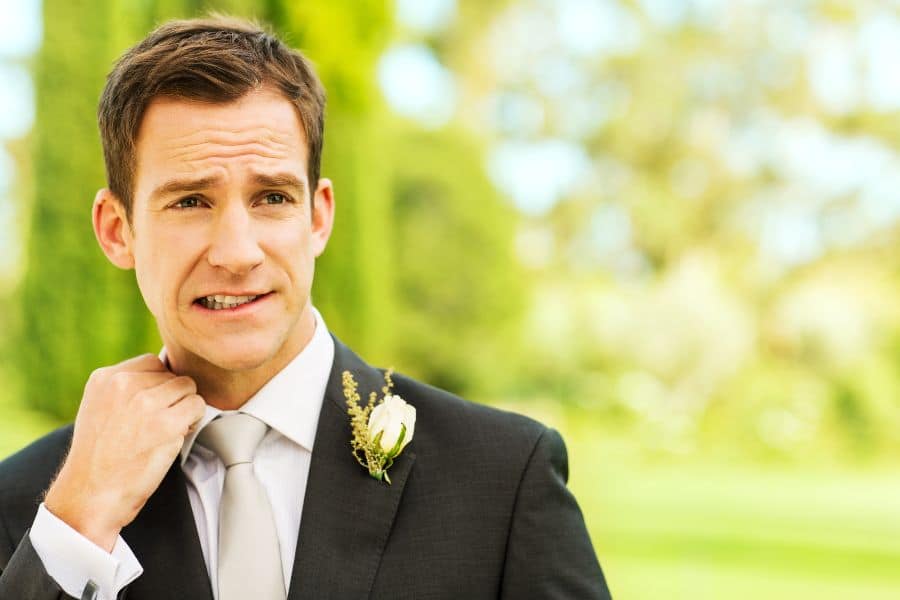
"The shakiest speakers I've seen are always the ones who didn't rehearse. Confidence isn't a personality - it's preparation."
Start Early, Avoid the Clichés
Whatever you do, resist the urge to do the "going to Bangor for two weeks" joke. The couple trusted you with this - don't blow it.
The single best thing you can do is start early. You'll hear people boast that they wrote their speech the night before, but that's a tactic best left to the brave, the foolish, or the outrageously gifted. A great speech takes time, drafts, and a few honest read-throughs. Give yourself the runway and you'll deliver something that genuinely lands.
And steer clear of the tired clichés. With the whole internet at your fingertips, there's no excuse for the same gags every guest has heard a hundred times. Find something fresher, something personal. I've watched the Bangor joke die in silence more times than I care to count - learn from those rooms.
Writing a wedding speech doesn't have to be stressful - in fact, it should be fun. Know your audience, open big, keep it tight, and start early. Do that and you'll have the room laughing, cheering, and maybe shedding a tear or two. Best of luck.
Still working out who speaks when? For the full running order, see our guide to the order of wedding speeches.
A great speech needs a great room.
The speeches land best when the room is already warmed up and buzzing. That's exactly what close-up magic does before anyone stands to speak - it breaks the ice, fills the lulls, and gets everyone in the mood. 28 years in, 214 five-star reviews, no cheese. Take a look at what I do for weddings.


